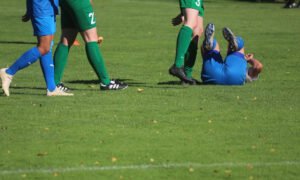
Groin Strain in Walking Football
A groin strain is an injury to the muscles on the inside of the thigh that help stabilise the hips, control side-to-side movement and support balance. These muscles are heavily used when changing direction, stretching for the ball and controlling movement — all key parts of walking football.
Because many players return to football later in life after long breaks, groin muscles are often tight and weaker than they should be, making them more prone to strain.
Why Groin Strains Happen
Groin strains usually occur when the inner thigh muscles are suddenly stretched, most commonly when reaching for a loose ball, turning quickly, side-stepping or over-extending the leg.
Cold muscles, poor warm-ups, fatigue, dehydration and limited hip mobility all increase the risk.
Types of Groin Strain
Mild strains cause tightness and discomfort but still allow movement. Moderate strains cause sharper pain and discomfort when walking. Severe strains involve tearing of the muscle and may lead to swelling or bruising.
Early Warning Signs
Tightness on the inside of the thigh, soreness after matches, tenderness when pressing the muscle, discomfort when stepping sideways and pain when lifting the knee are common warning signs.
Ignoring these early signs can quickly lead to more serious injury.
What To Do If Pain Starts
Stop playing immediately. Apply ice for 15–20 minutes, elevate the leg and avoid aggressive stretching. If pain lasts longer than 48 hours, seek medical advice.
Typical Recovery Times
| Severity |
Recovery Time |
| Mild strain |
1–2 weeks |
| Moderate strain |
3–6 weeks |
| Severe tear |
8–12+ weeks |
Rehab and Strengthening
Gentle groin stretches, hip mobility exercises and slow strengthening movements can help rebuild strength once pain settles.
Prevention Tips
Warm up thoroughly, stretch hips and groin muscles regularly, improve hip mobility and build match intensity gradually.
Final Thoughts
Groin strains are very common but highly preventable. Good preparation and early action will help keep you playing safely.
Part of the Walking Football Injuries Hub:
👉 /walking-football-injuries/